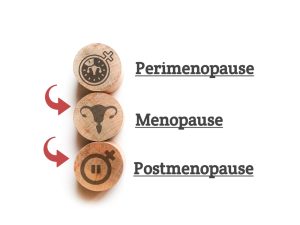

Many women hear the terms perimenopause and postmenopause used interchangeably, but they are actually two very different stages of hormonal transition. So what is the difference between perimenopause and postmenopause?
The short answer is that perimenopause is the transition phase leading up to menopause, while postmenopause is the stage after menopause has officially occurred. Although both involve hormonal changes, the way those changes behave in the body is very different.
Understanding these differences between peri- and postmenopause is important for recognizing symptoms, making informed health decisions, and choosing the right type of care.
What Is Perimenopause?
Perimenopause is the transitional phase before menopause when a woman’s reproductive hormones begin to fluctuate and gradually decline. This stage can begin as early as the mid-30s or 40s and may last several years.
During perimenopause, the ovaries do not stop functioning immediately. Instead, hormone production becomes irregular, especially:
- Estrogen
- Progesterone
These fluctuations create unpredictable changes in the body.
How Perimenopause Works
In perimenopause:
- Hormone levels rise and fall unevenly
- Ovulation becomes irregular
- Menstrual cycles may shorten or lengthen
- Progesterone often declines earlier than estrogen
This hormonal instability is what leads to many of the symptoms associated with perimenopause. Because hormones are fluctuating rather than staying consistently low, symptoms can vary significantly from month to month.
What Is Postmenopause?
Postmenopause begins after a woman has gone 12 consecutive months without a menstrual period. At this point, ovarian hormone production has significantly decreased and remains consistently low.
Unlike perimenopause, postmenopause is not a fluctuating phase — it is a stable, low-hormone state.
In this stage:
- Estrogen remains low
- Progesterone remains low
- Ovulation no longer occurs
The body must adjust to a new hormonal baseline.
How Postmenopause Works
In postmenopause, the body shifts into a different regulatory state. Because estrogen and progesterone remain consistently low:
- Metabolism may slow
- Bone density declines gradually
- Inflammation may increase
- Brain neurotransmitter balance can shift
- Tissue elasticity decreases
These changes are long-term and not cyclical like perimenopause.
Key Differences Between Perimenopause and Postmenopause
Although both stages involve hormonal changes, perimenopause and postmenopause are different in important ways.
1. Hormone Patterns
Perimenopause:
- Hormones fluctuate unpredictably
- Estrogen may spike or drop
- Progesterone often declines first
Postmenopause:
- Hormone levels remain consistently low
- No ovulation occurs
- No cyclical hormone shifts happen
2. Menstrual Cycles
Perimenopause:
- Irregular periods
- Heavier or lighter bleeding
- Skipped cycles
Postmenopause:
- No menstrual periods
3. Symptoms Pattern
Perimenopause:
Symptoms often come and go due to hormone fluctuations:
- Mood swings
- Anxiety spikes
- Irregular sleep
- Breast tenderness
- Cycle-related symptoms
Postmenopause:
Symptoms are more stable and chronic:
- Vaginal dryness
- Bone loss
- Metabolic changes
- Chronic joint discomfort
- Long-term sleep changes
4. Duration
Perimenopause:
- Can last 4–10 years
Postmenopause:
- Lasts the rest of a woman’s life after menopause begins
5. Biological Focus
Perimenopause:
- Hormone instability is the main issue
Postmenopause:
- Hormone deficiency is the main issue
Why Perimenopause Symptoms Can Feel Unpredictable
One of the most confusing aspects of perimenopause is symptom variability. This happens because:
- Estrogen can fluctuate dramatically
- Progesterone often declines unevenly
- Stress and cortisol interact with reproductive hormones
As a result, women may feel fine one week and experience significant symptoms the next. This unpredictability is a key feature of perimenopause.
Why Postmenopause Symptoms Are More Persistent
In postmenopause, hormone levels are no longer fluctuating. Instead, they are consistently low. Because of this:
- Symptoms may feel more stable
- The body is adjusting to a new baseline
- Long-term changes in metabolism and bone health become more noticeable
Instead of cycling symptoms, postmenopausal women often experience ongoing patterns. This makes postmenopause very different from perimenopause.
Overlapping Symptoms Between Both Stages
Despite their differences, perimenopause and postmenopause share many symptoms, including the following:
- Hot flashes
- Night sweats
- Sleep disturbances
- Mood changes
- Fatigue
- Brain fog
- Weight changes
- Reduced libido
The difference is often intensity and pattern rather than symptom type.
Why Hormones Affect So Many Systems
Estrogen and progesterone are not just reproductive hormones. They influence multiple systems in the body, including:
- Brain function and neurotransmitters
- Metabolism and insulin sensitivity
- Bone remodeling
- Cardiovascular health
- Inflammation regulation
- Sleep cycles
This is why changes in these hormones can lead to widespread symptoms across the body.
The Role of Inflammation in Both Stages
Despite their differences, both perimenopause and postmenopause are associated with changes in inflammation levels. As estrogen fluctuates or declines:
- Anti-inflammatory protection decreases
- Joint pain may increase
- Fatigue may worsen
- Cognitive symptoms may become more noticeable
Inflammation often plays a major role in symptom severity during both stages.
Why Functional Medicine Care Can Help
Perimenopause and postmenopause are not just hormonal events; they are whole-body transitions.
Functional medicine approaches these changes by focusing on root causes rather than isolated symptoms. A functional approach may evaluate:
- Hormone levels and patterns
- Cortisol and stress response
- Thyroid function
- Insulin resistance and metabolism
- Gut health and inflammation
- Nutrient deficiencies
Instead of treating symptoms individually, this approach looks at how all systems interact.
How Functional Medicine Supports Perimenopause
During perimenopause, functional care often focuses on:
- Stabilizing hormone fluctuations
- Supporting progesterone and estrogen balance
- Improving stress resilience
- Regulating sleep cycles
- Reducing inflammation
The goal is to reduce hormonal volatility and improve quality of life during transitions.
How Functional Medicine Supports Postmenopause
In postmenopause, care often focuses on:
- Supporting long-term hormone deficiency
- Protecting bone density
- Improving metabolic health
- Reducing cardiovascular risk
- Managing inflammation
The goal is to optimize long-term health in a low-hormone state.
Why a Root-Cause Approach Matters
Without a root-cause approach, many women are treated only for symptoms such as the following:
- Sleep problems
- Mood changes
- Weight gain
- Fatigue
However, these symptoms are often interconnected and driven by deeper hormonal and metabolic changes. By addressing the underlying systems, it becomes possible to create more sustainable improvement.
Comprehensive Hormone Care at True Life Medicine
If you are navigating perimenopause or postmenopause, a comprehensive and individualized approach can make a meaningful difference.
At True Life Medicine, women’s hormone health is approached through a root-cause model that evaluates the full picture of hormonal, metabolic, and inflammatory health. Our approach helps patients:
- Understand hormonal changes across both stages
- Identify root causes of symptoms
- Improve metabolic and hormonal balance
- Create personalized care strategies for long-term health
If you are seeking comprehensive perimenopausal and postmenopausal care, you can learn more here: https://truelifemedicine.com/womens-hormone-doctor-colorado-springs
Perimenopause vs. Postmenopause
Perimenopause and postmenopause are two different stages of hormonal transition in a woman’s life. Perimenopause is characterized by fluctuating hormones and irregular cycles, while postmenopause is defined by consistently low hormone levels after menstruation has ended.
Although they share many symptoms, the underlying mechanisms are different, which is why treatment approaches may also need to differ.
Because these transitions affect multiple systems in the body, including hormones, metabolism, brain function, and inflammation, a comprehensive and root-cause approach is often the most effective way to manage symptoms and support long-term health.
With the right evaluation and care, women can better understand these changes and navigate both stages with greater clarity and support. For holistic hormonal care, visit True Life Medicine today: https://truelifemedicine.com/womens-hormone-doctor-colorado-springs